ICONOCLASTIC TENDENCIES DEPLOYED IN SPACE
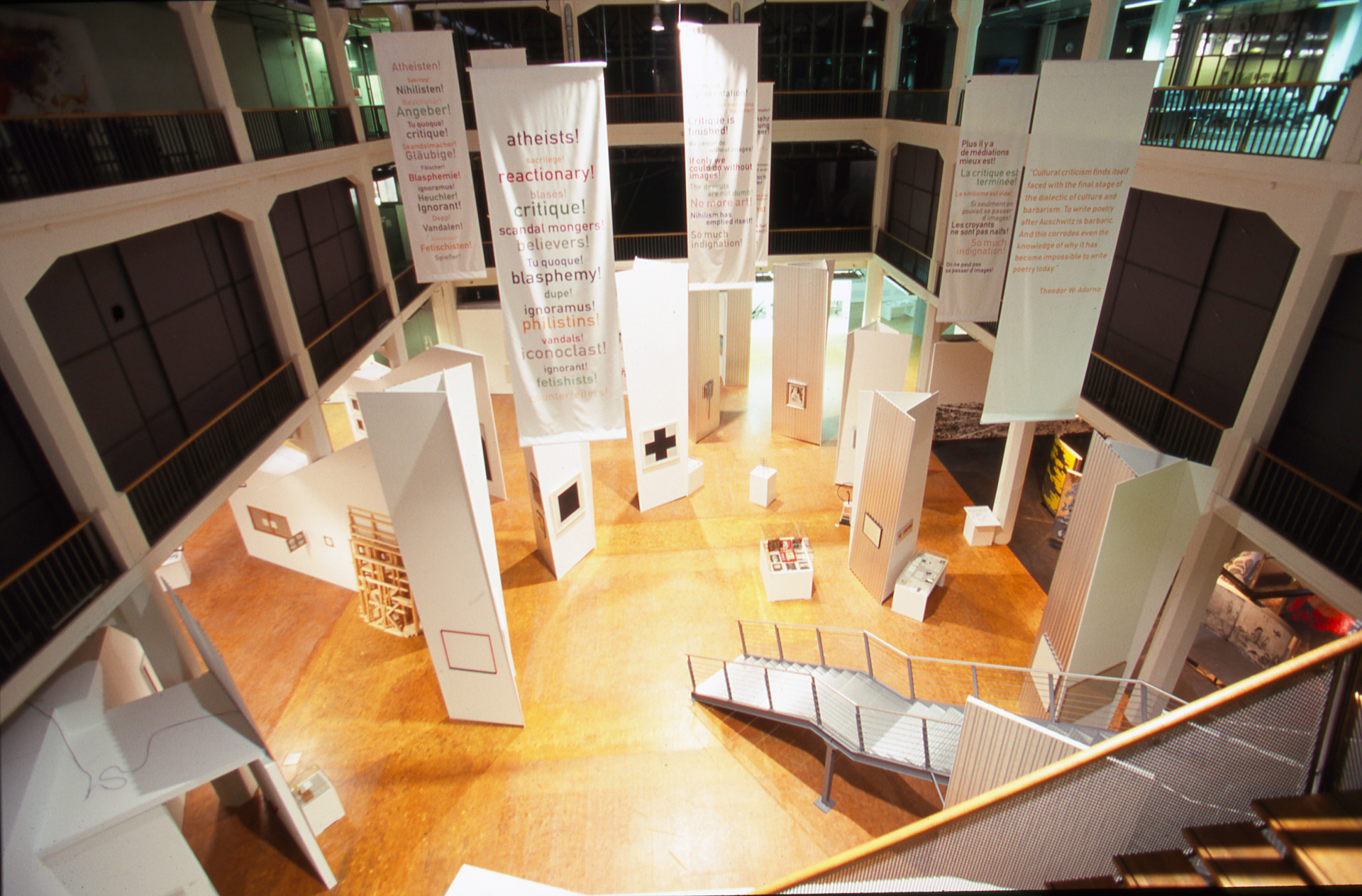
The curatorial concept of Iconoclash investigated the power of images, more specifically, that which is made visually perceptible by modes of representation and the destruction of representation. The many exhibited artworks, artifacts, documents, and publications primarily appealed to the faculty of vision. What emerged from this thematic approach was a unique scenography in which the exhibited items coexisted in a non hierarchical way. Visitors were initially presented with a curated view before being released into the rhizomatic exhibition architecture by way of a staircase, containing key works of Peter Weibel’s curatorial narrative and stretching across the spacious industrial halls in which the ZKM | Karlsruhe is housed.
The etching, Allegory of Iconoclasm, served as a starting point for the exhibition scenography. The composite image depicts instances of idolatry. Viewed from a distance, the overall chaos coalesces into a whole: The grotesque portrait of a monk. Similarly to the cells within the exhibition, the pictorial scenes sprawl across the page without any hierarchy, thus epitomizing the phenomenon of iconoclasm, which can be defi ned as the intentional desecration or destruction of imagery.
Announcements on temporary walls directed visitors from the entrance hall of the ZKM | Karlsruhe towards Cacophony Corridor, a sound installation by Denise Laborde conceived for the exhibition. It served as served as a prelude to the exhibition and ushered in its scenography.
Following this audible equivalent of “iconoclashes”, the visitor arrived at a staircase designed specifically for the exhibition by the architect and scenographer Manfred Wolff-Plottegg. It led to the first floor where the artworks of Kasimir Malevich were arranged in juxtaposition to those of Marcel Duchamp.
By leaving them with no choice but to go down the stairs, the visitors unwittingly performed a theatrical interpretation of Nude Descending a Staircase, No. 2 (1912) by Marcel Duchamp. The very act of descending the flight of stairs was not only a means to an end but also reminiscent of the figure in Duchamp’s famous oil painting. A constellation of iconic modernist art works that questioned the very notion of representation from different standpoints awaited the visitors at the bottom of the stairs.
Three readymades – everyday objects transformed into art – were displayed in this first sequence. La Boîte en valise (1936-41), an original work by Duchamp, was shown next to an appropriation of the Bicycle Wheel, Duchamp’s first readymade from 1913, by Elaine Sturtevant, and a copy of Duchamp’s Bottle Dryer (1914). Around the readymades stood three columns with triangular bases upon which Kasimir Malevich’s both iconic and iconoclastic masterpieces of abstract painting were mounted.
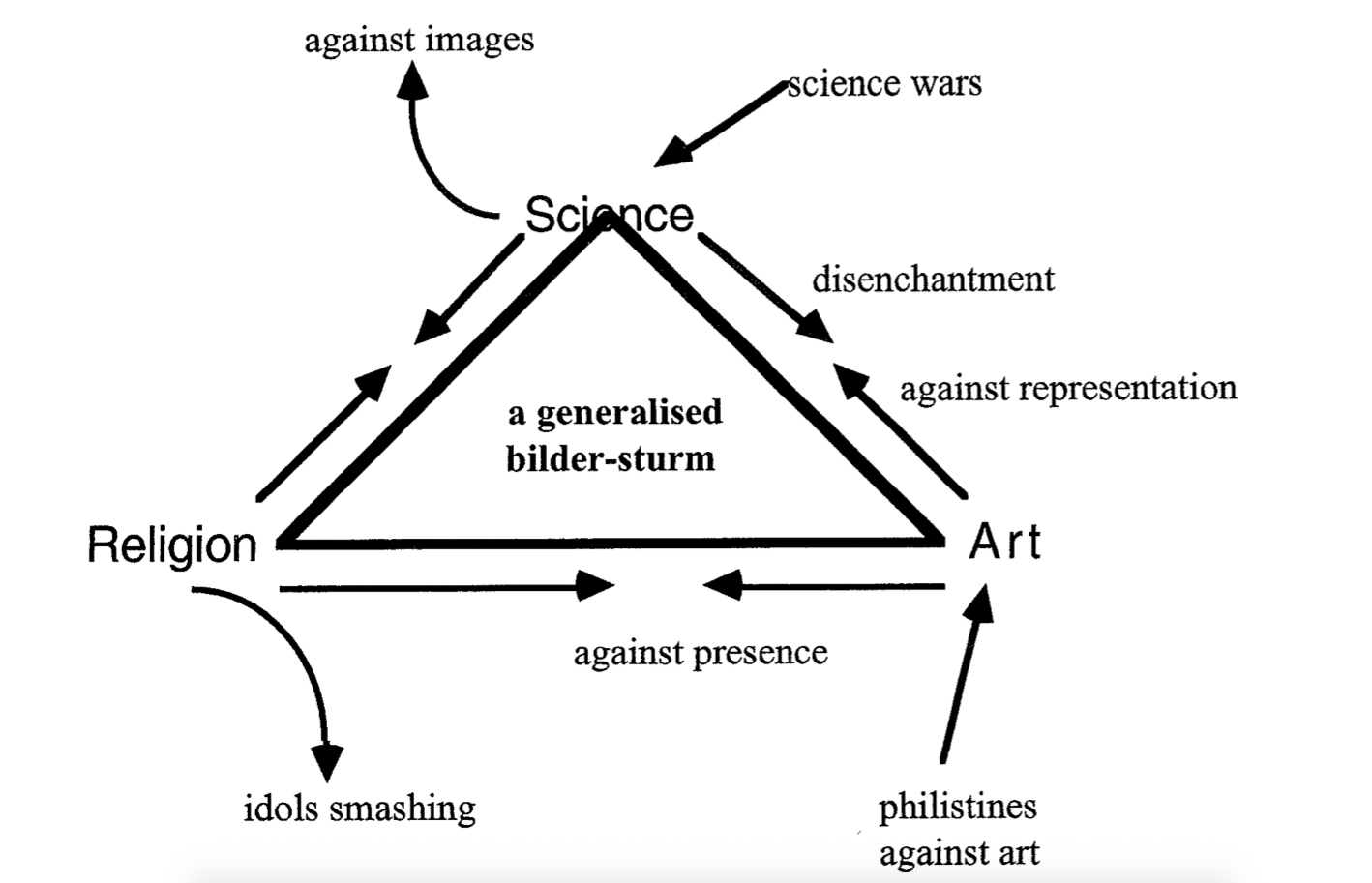
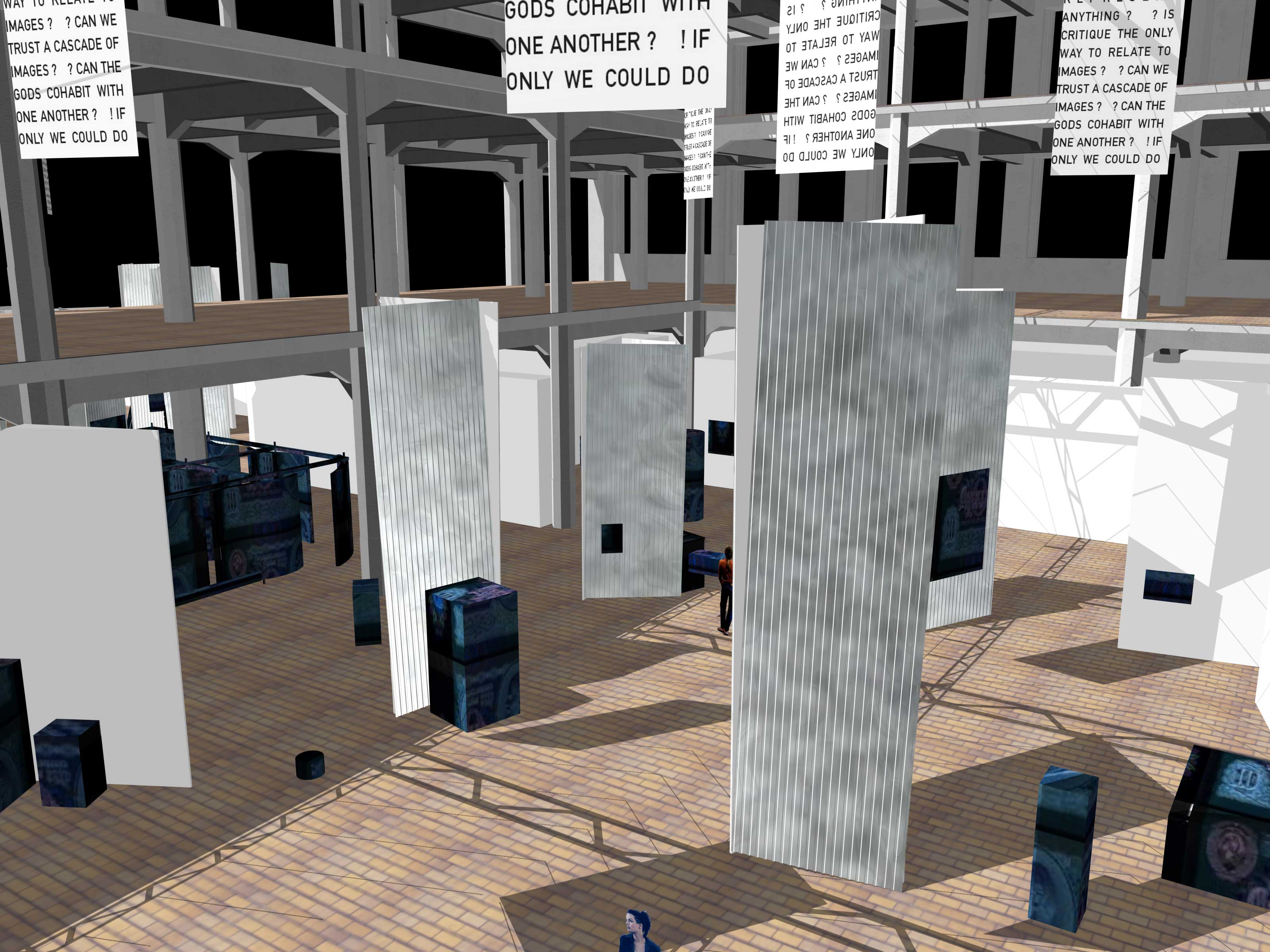
A bird’s eye view alone was not enough to grasp the scale of the exhibition space which, like a container, enveloped the curated clusters of exhibits. The lofty ceilings in the atria of the ZKM | Karlsruhe facilitated additional scenographic elements. Quotations from various authors printed on large banners hung from the ceiling. Their contents corresponded to the different sections of the exhibition (art, science, and religion) and at the same time offered orientation in the exhibition space.
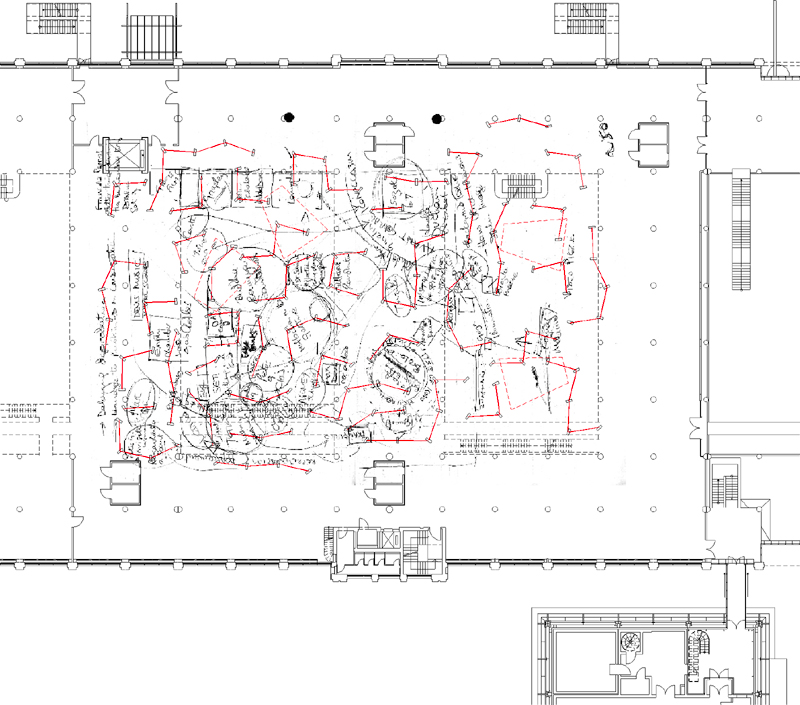
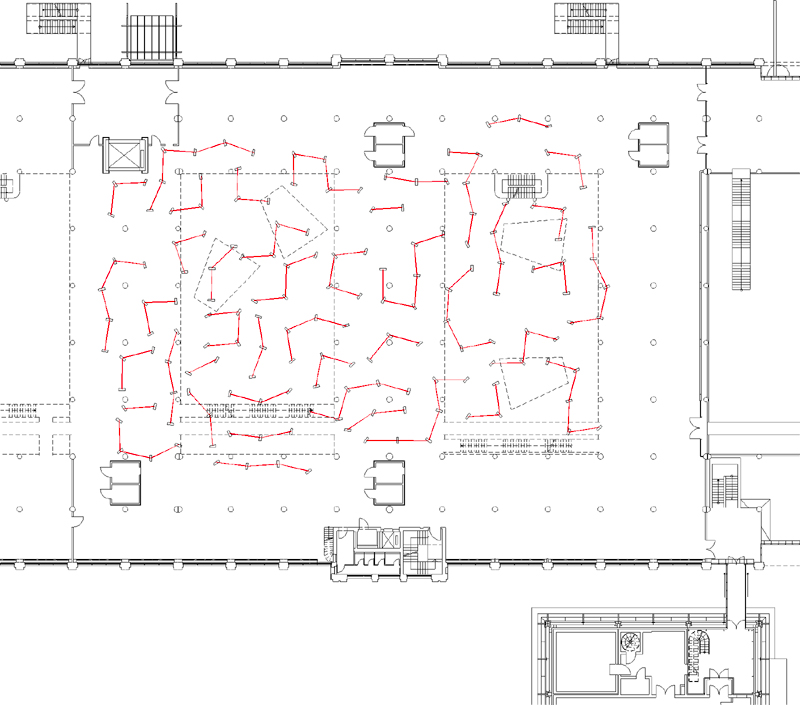
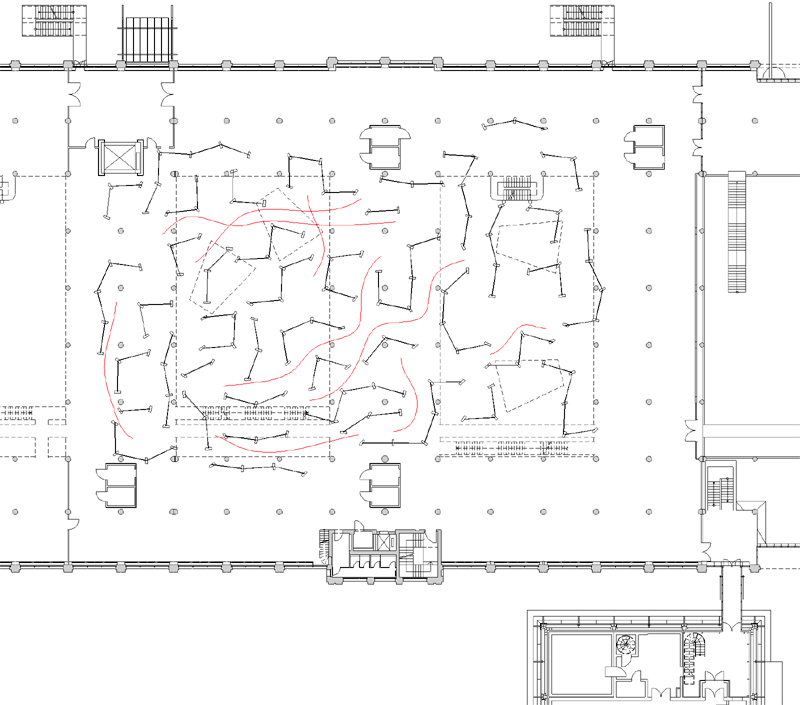
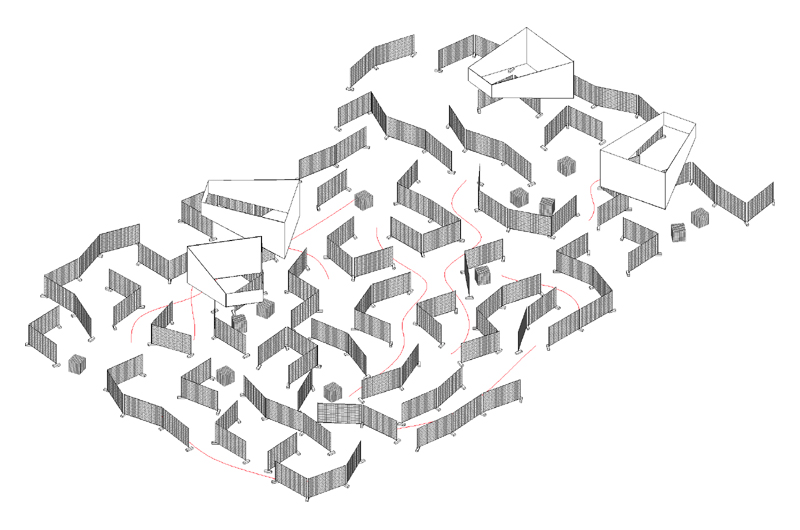
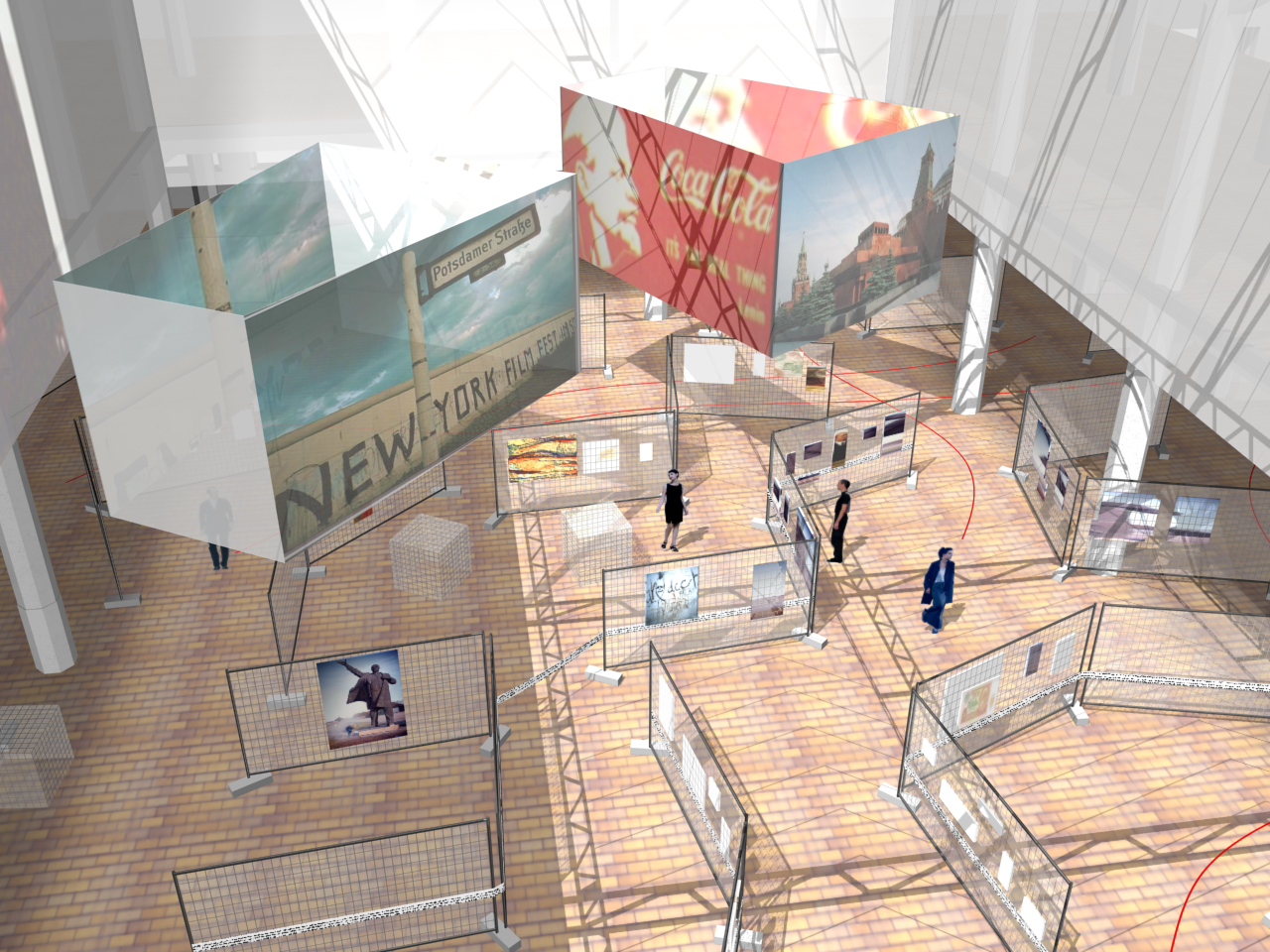
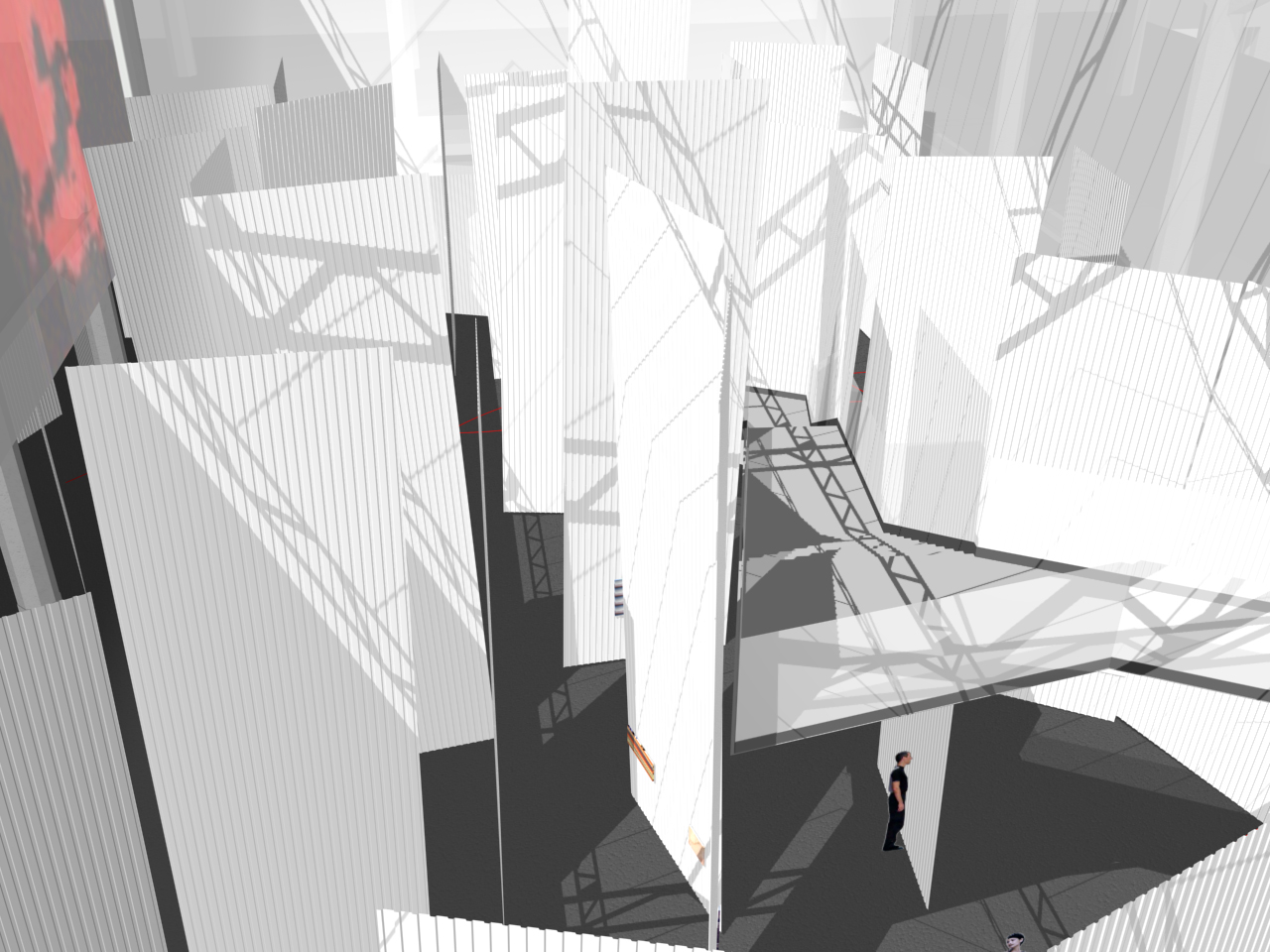
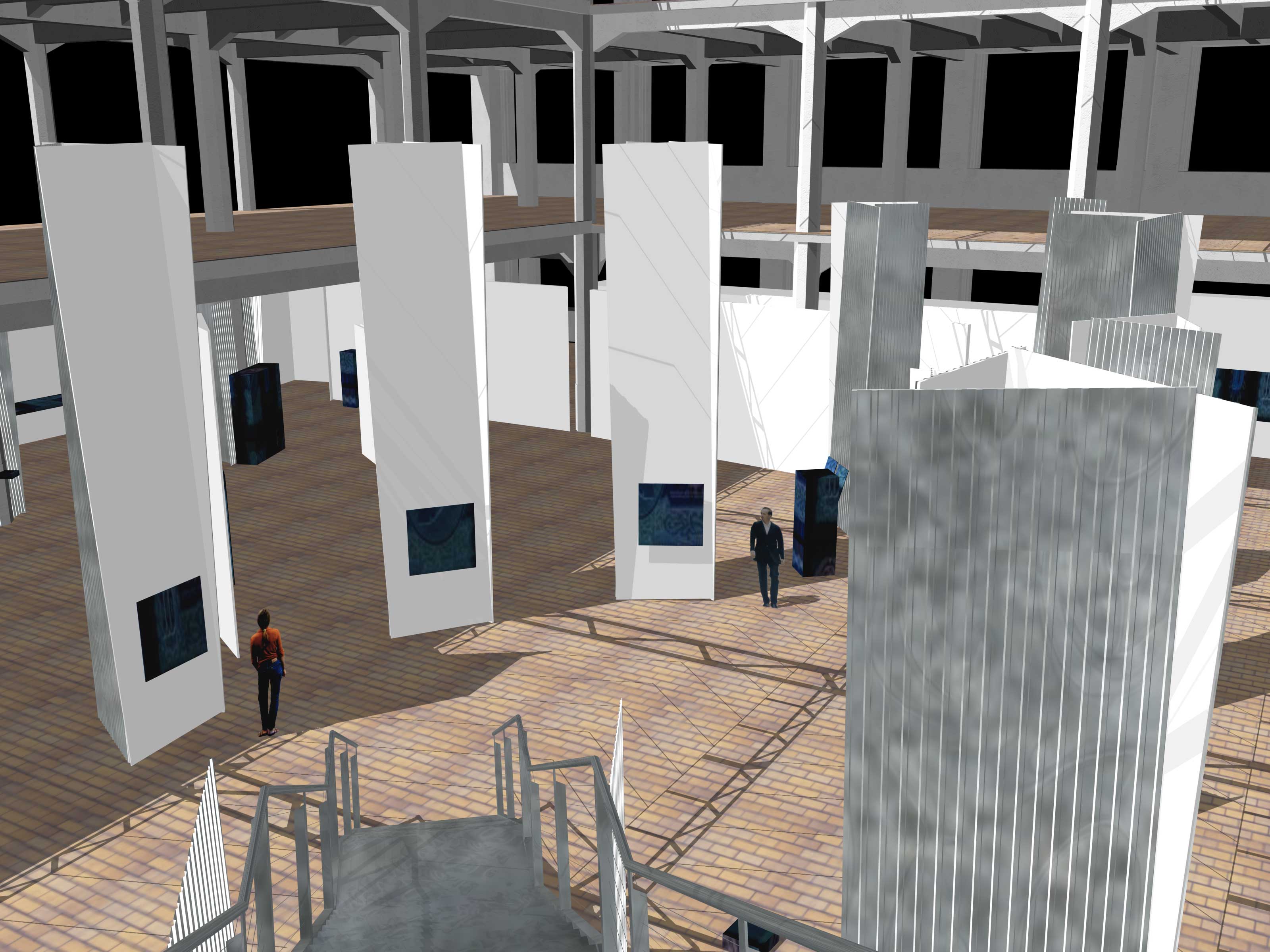
Upon leaving the first sequence, the visitor was thrust into a labyrinthine architecture of open-ended paths that offered an expedition which differed significantly from the typical white cube exhibition experience. The choice of industrial materials was a further distinguishing feature of Manfred Wolff-Plottegg’s exhibition design. Corrugated iron conveyed a dynamic, modifiable, and contingent scenography.
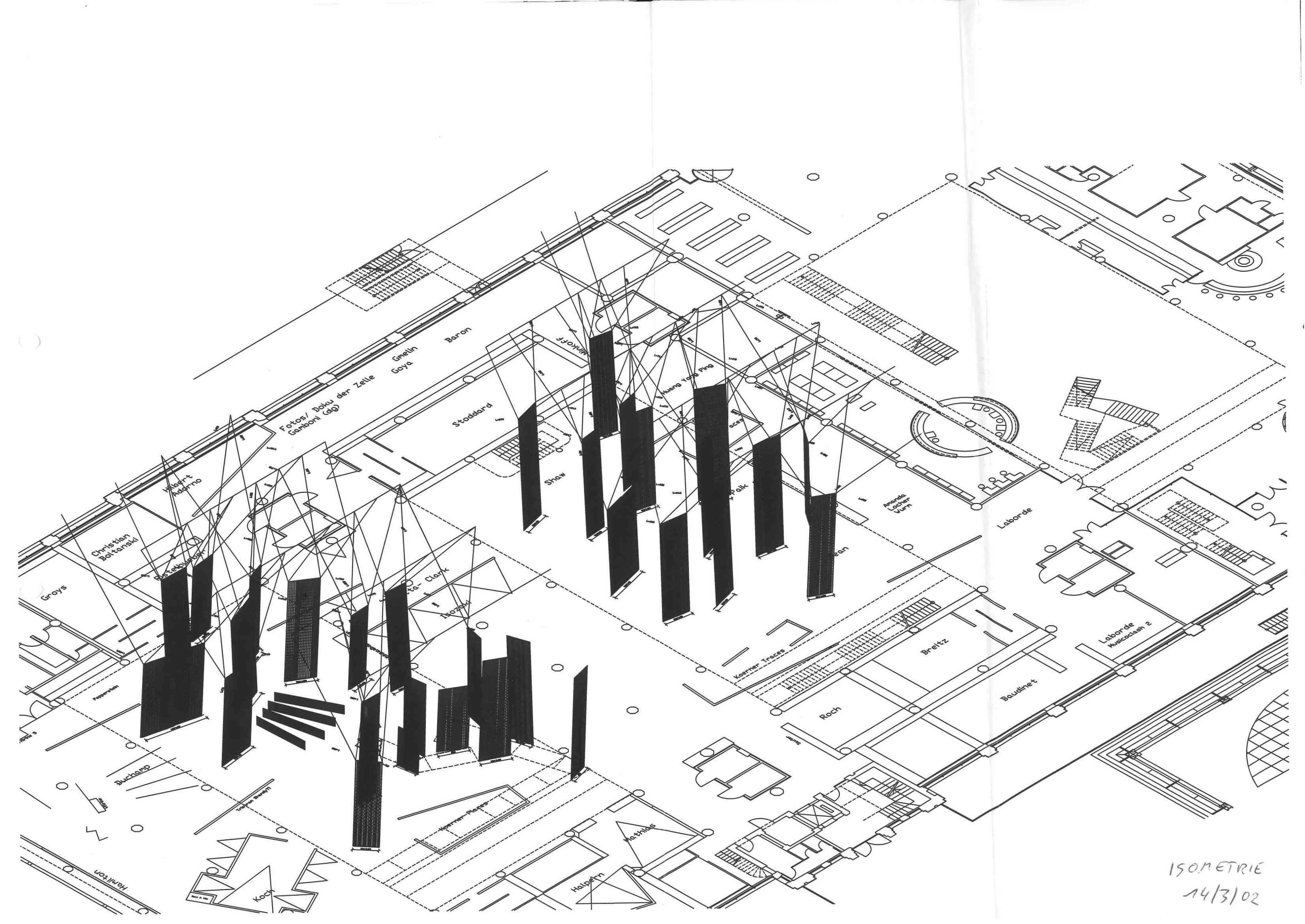
The final architecture of Iconoclash that resulted was the out come of a process which entailed multiple iterations, reconstructed on the basis of archival materials, and in close collaboration with the architect. As the illustrations indicate, the main motif of the plan was a labyrinthine, nonhierarchical spatial layout. Materials used on building sites or in industrial buildings played an even more central role in earlier iterations of the plan, which included temporary metal fences arranged in zig-zag lines, and hanging metal sheets.
Twenty years later, the ideas that were specific to the content and space of the physical exhibition in 2002 at the ZKM | Karlsruhe have been readapted and restored in the present exhibition. By means of a digital exhibition model and virtual curatorial methodologies, the central notions of modifiability and contingency are effectively achieved in ways that were out of reach in 2002.
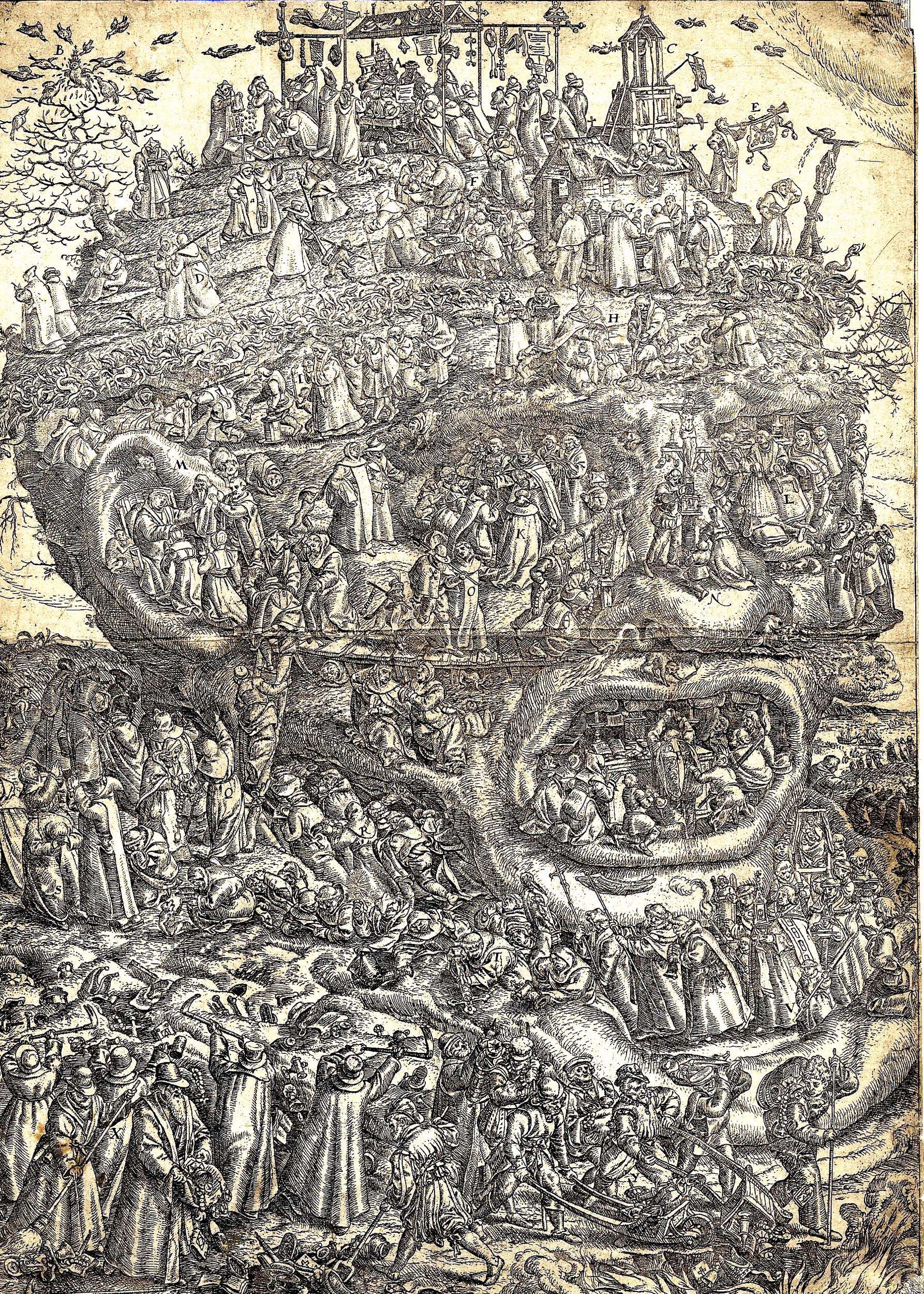
The British Museum, London
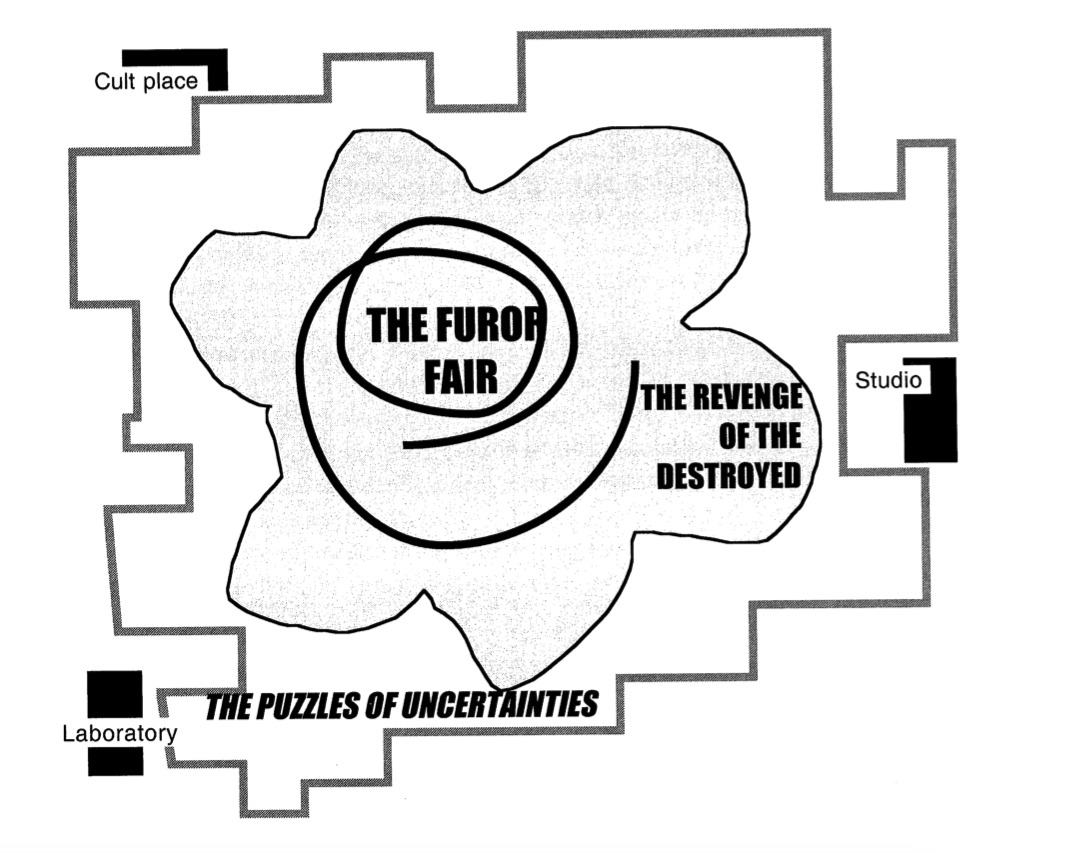
ZKM | Archives
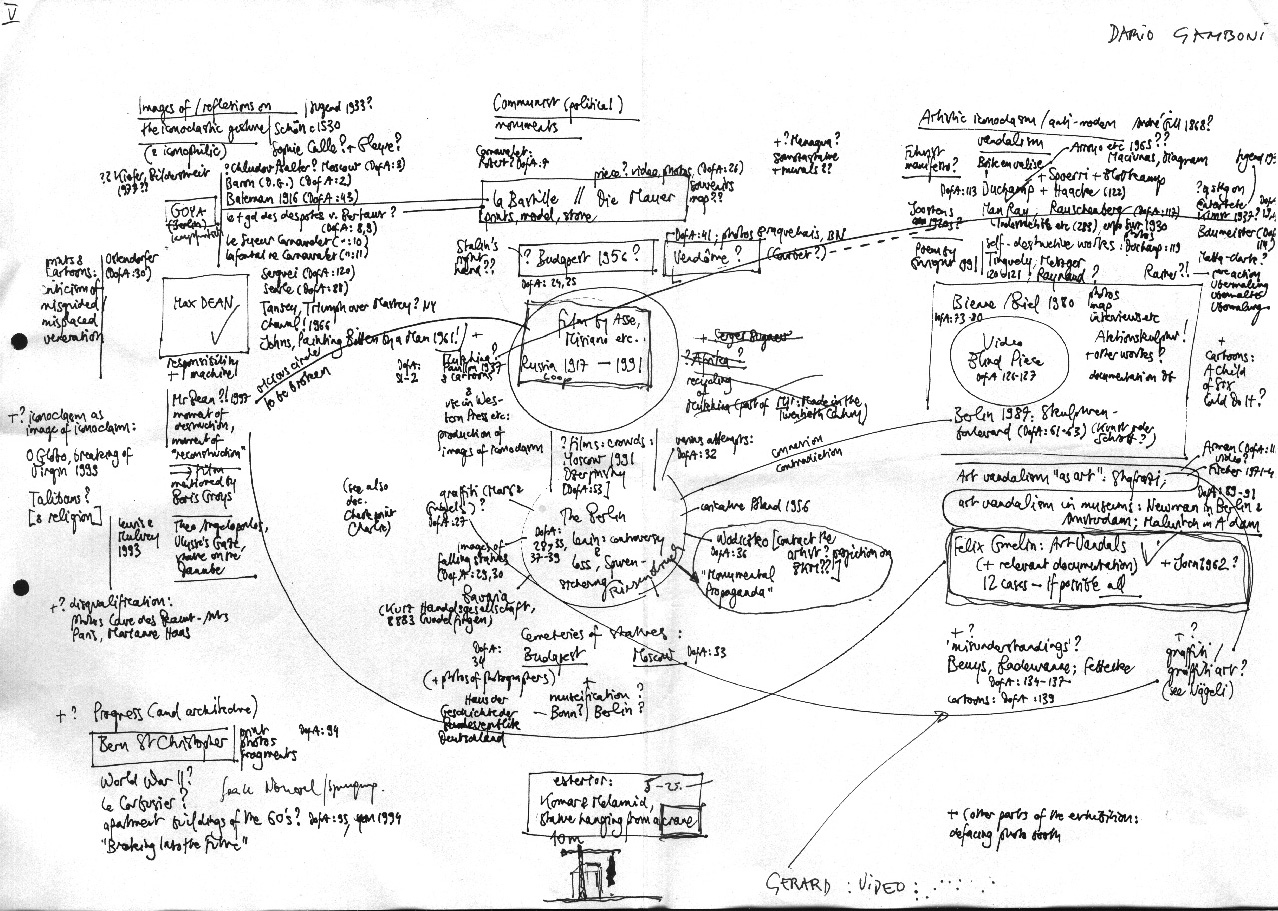
ZKM | Archives
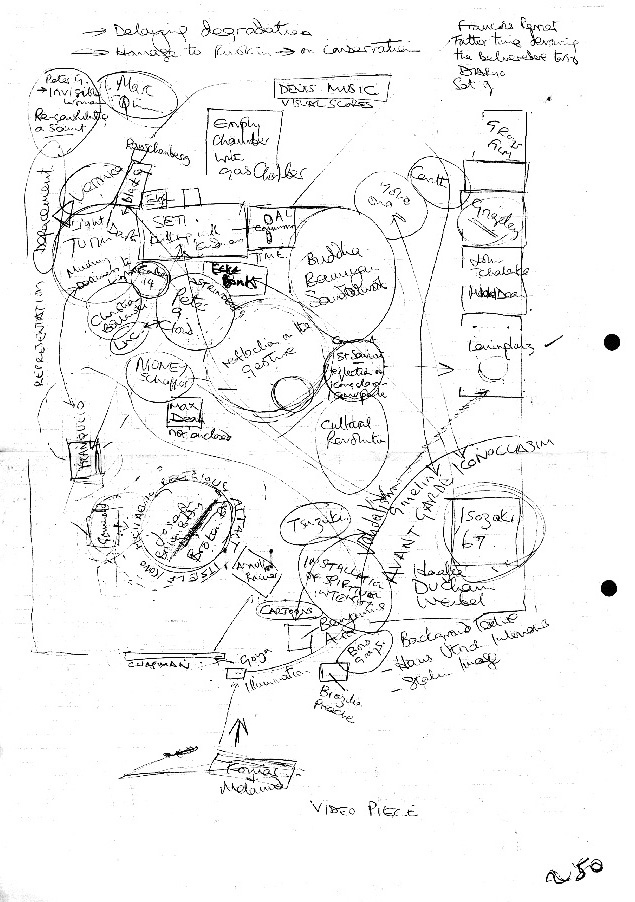
ZKM | Archive
Archive of Manfred Wolff-Plottegg
Archive of Manfred Wolff-Plottegg
Archive of Manfred Wolff-Plottegg
Archive of Manfred Wolff-Plottegg
Archive of Manfred Wolff-Plottegg
ZKM | Archives
Archive of Manfred Wolff-Plottegg
ZKM | Archives
Archive of Manfred Wolff-Plottegg
Archive of Manfred Wolff-Plottegg
© ZKM | Karlsruhe, Photo: ONUK
Find the INDEX number next to the artwork.
Tap number to type.