LES IMMATÉRIAUX
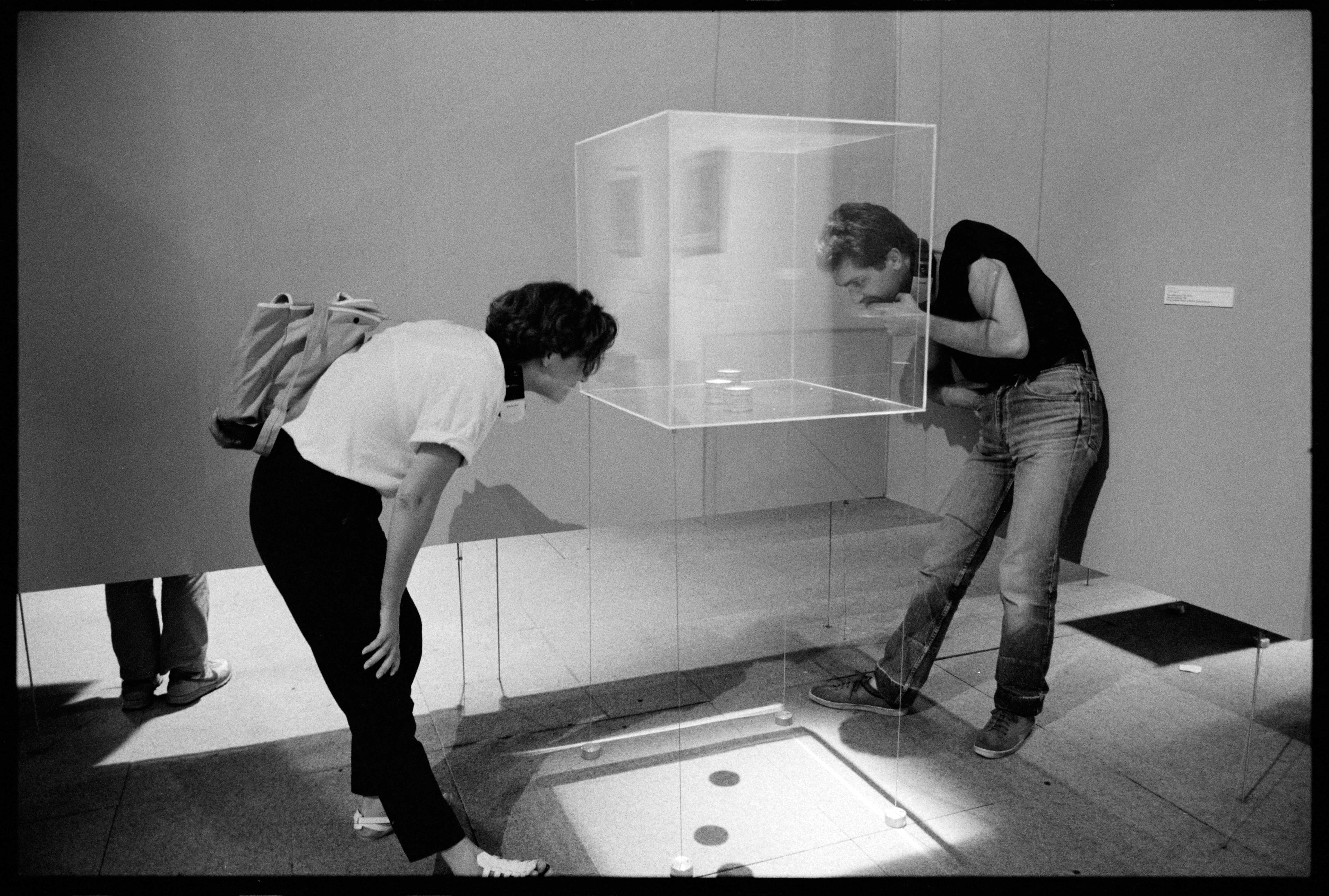
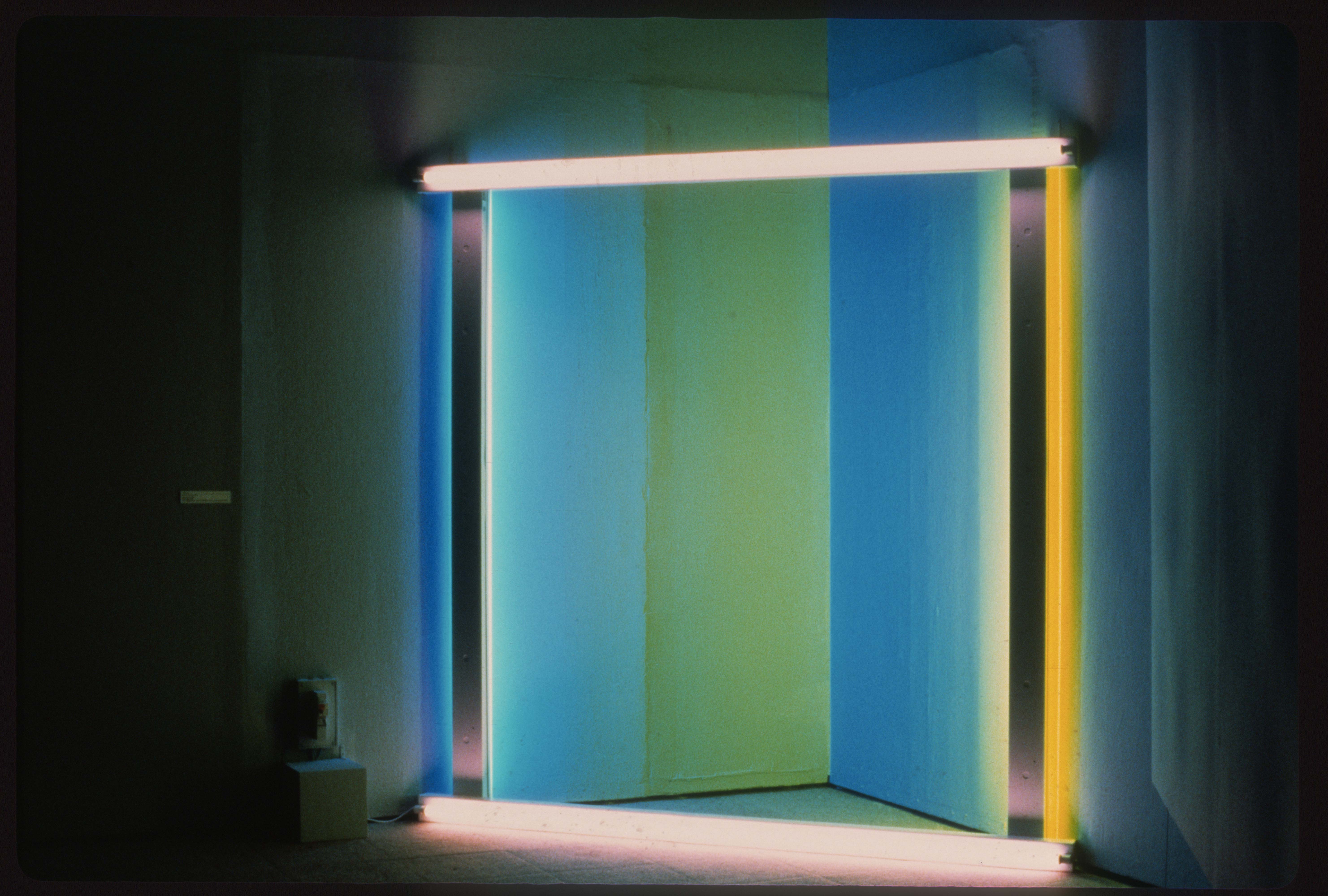
Les Immatériaux was curated by the French philosopher Jean-François Lyotard and the design theorist Thierry Chaput, together with a team of project managers and scientific advisors. It was organized by the Center for Industrial Creation (CCI) of the Centre Pompidou, where it was exhibited in 1985. On the basis of the neologism ‘immaterial’, the exhibition questioned the impact of the dematerialization of information on everyday life, arts and sciences. By exploring the intersection of art, science and technologies, this so-called manifestation put Lyotard’s concepts into practice. It examined the transition from the modern era to the postmodern era, a time in which new technologies were profoundly changing the relationship of humans to the world. Free from a narrative-driven and sequential spatial arrangement, Les Immatériaux proposed an alternative approach to knowledge transfer that was diametrically opposed to that of the world exhibition [Exposition Universelle Internationale].
According to Lyotard, “Insecurity, loss of identity, and crisis are being experienced not only in the economic and social domains, but also in those of human sensibility, knowledge, powers (fertility, life, death) and ways of life (the relation to work, home, food, etc.)”. The exhibition investigated this statement and in doing so challenged conventional curatorial methods. The notion that the exhibition is a space for experimentation and questioning rather than mere demonstration was fundamental to the curatorial process.
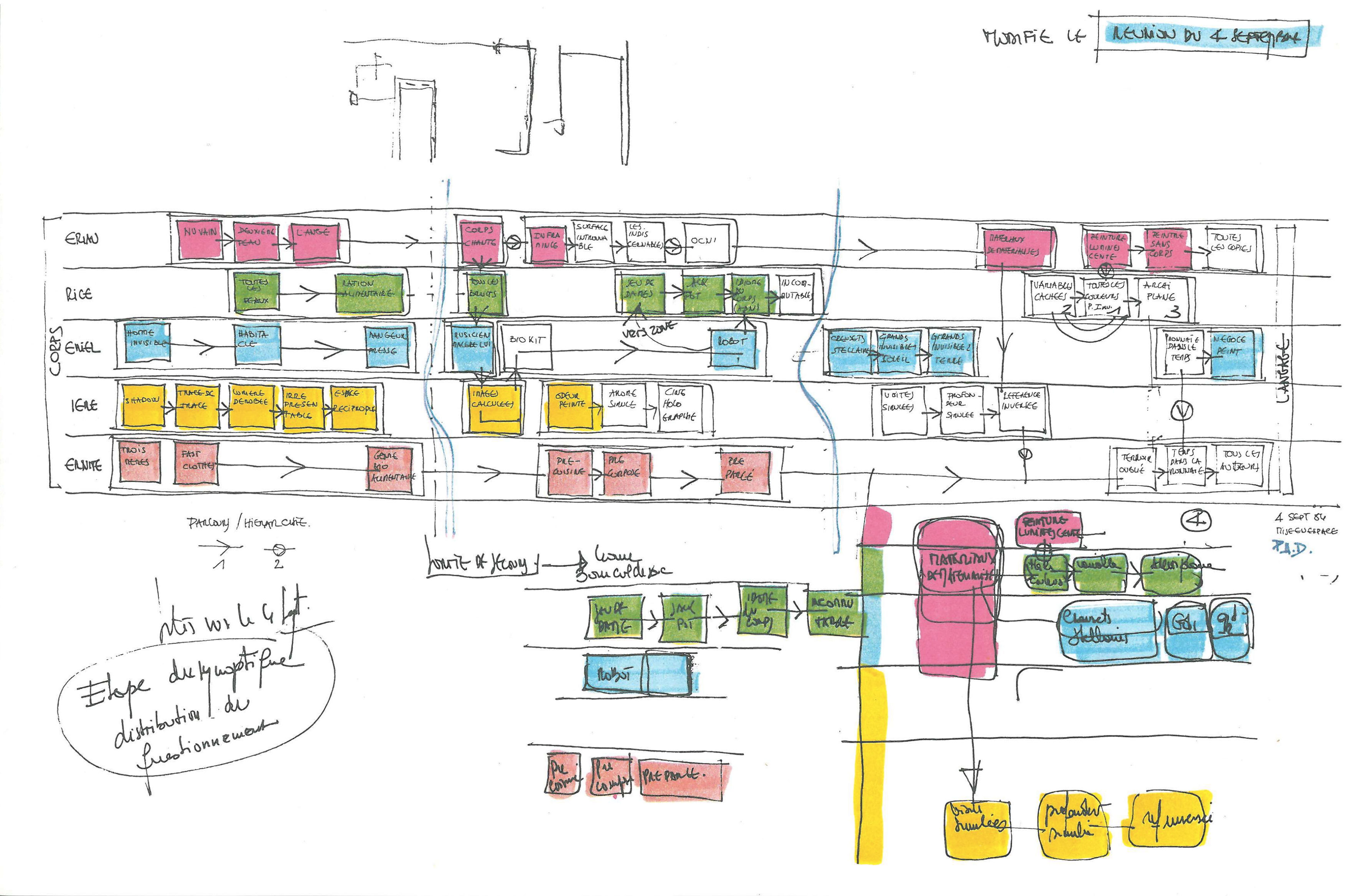
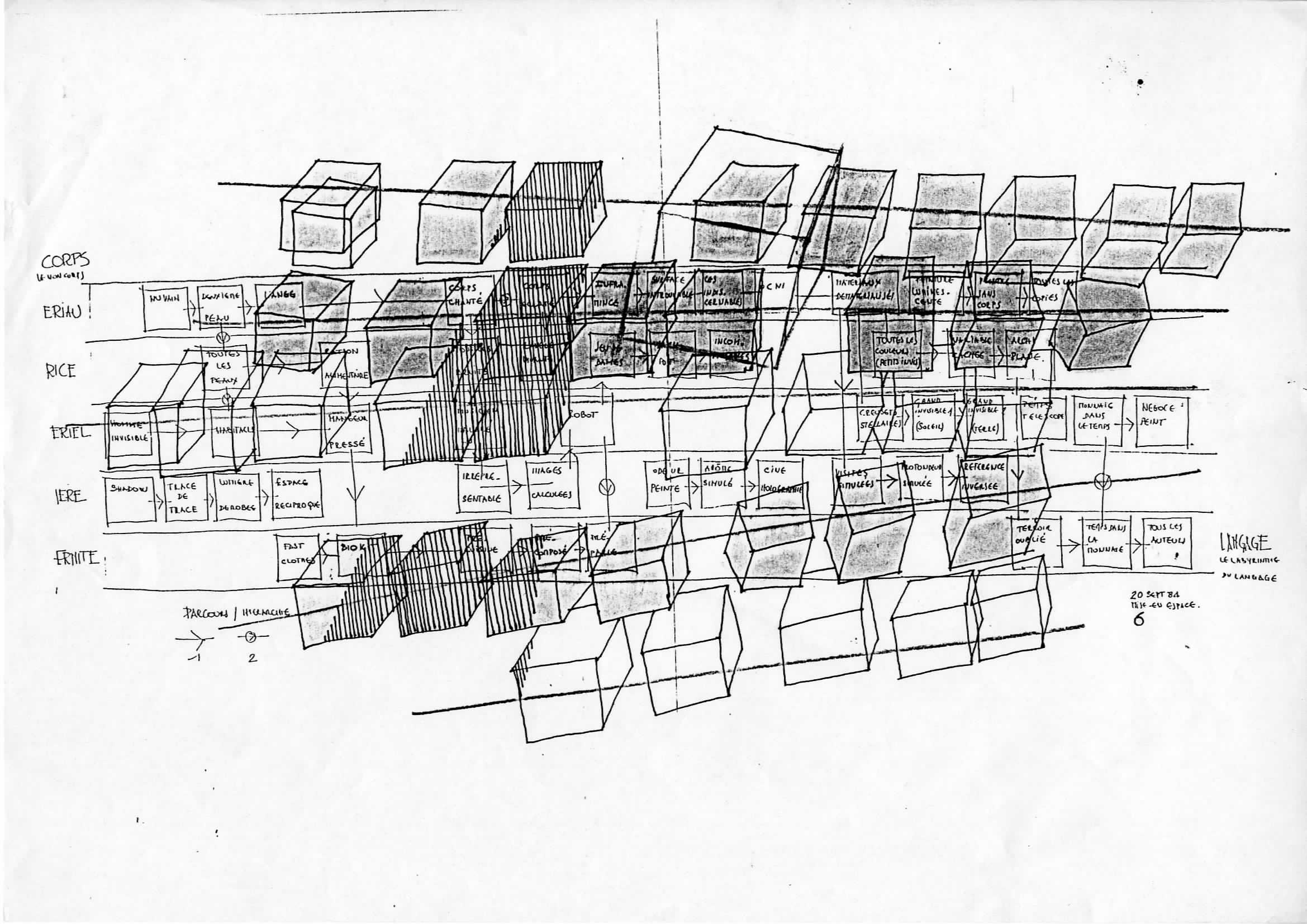
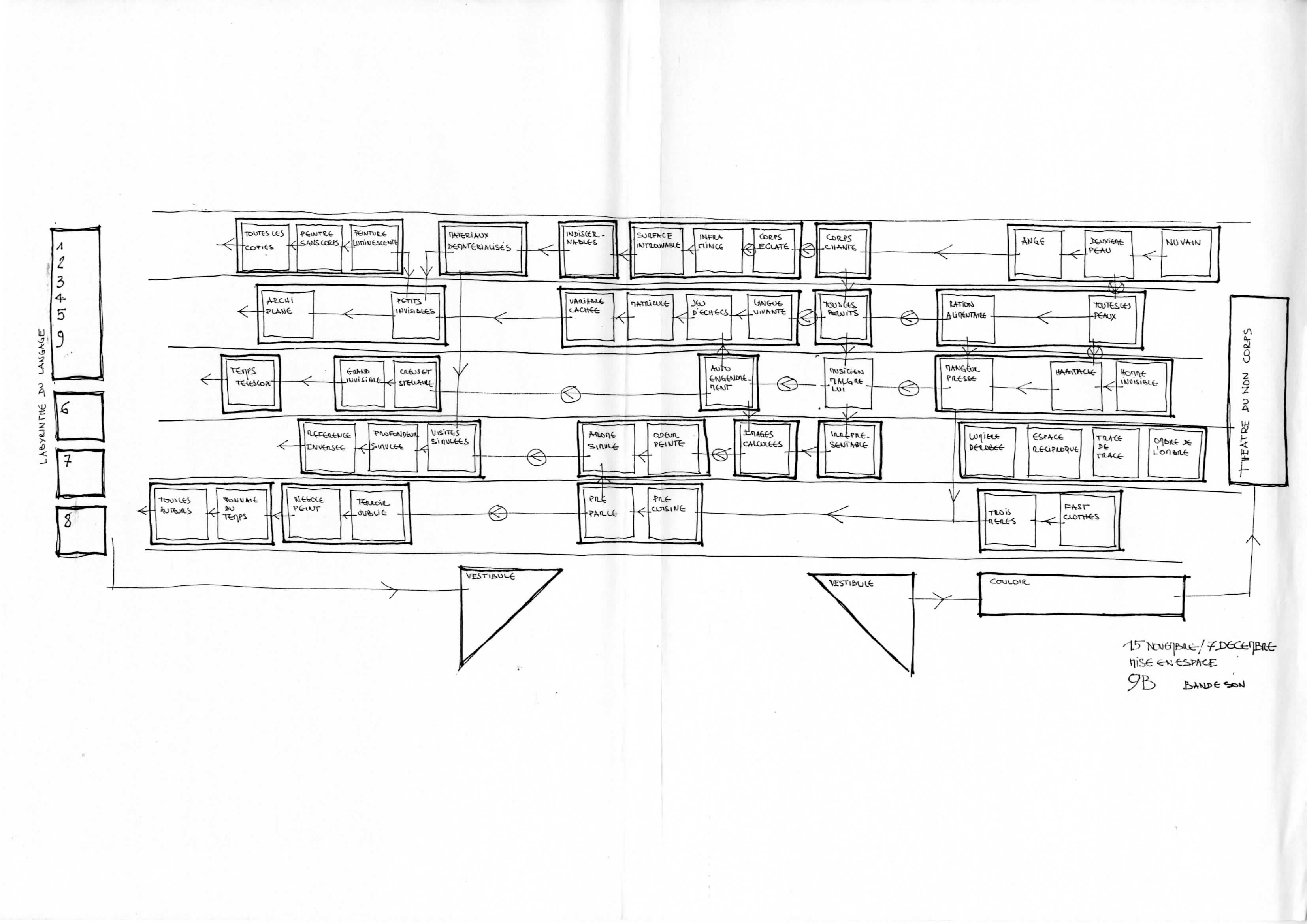
Les Immatériaux consisted of 61 sites spread across the fifth floor of the Centre Pompidou which were divided among five paths: matériau [material]; matrice [matrix]; matériel [hardware]; matière [matter]; maternité [maternity]. The theme of each path derived from the shared etymological root “mât”, which refers to making by hand, measuring, or constructing.
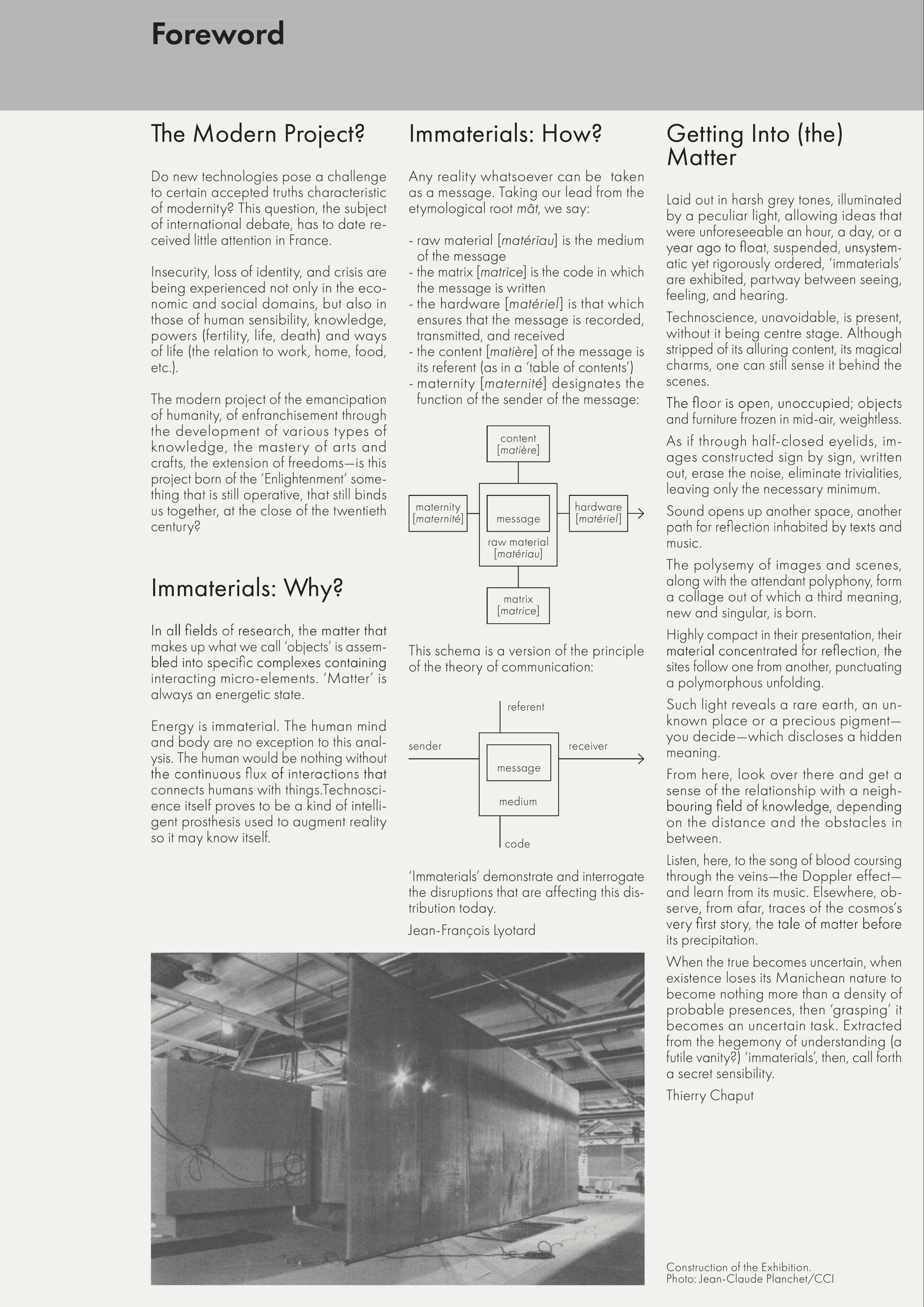
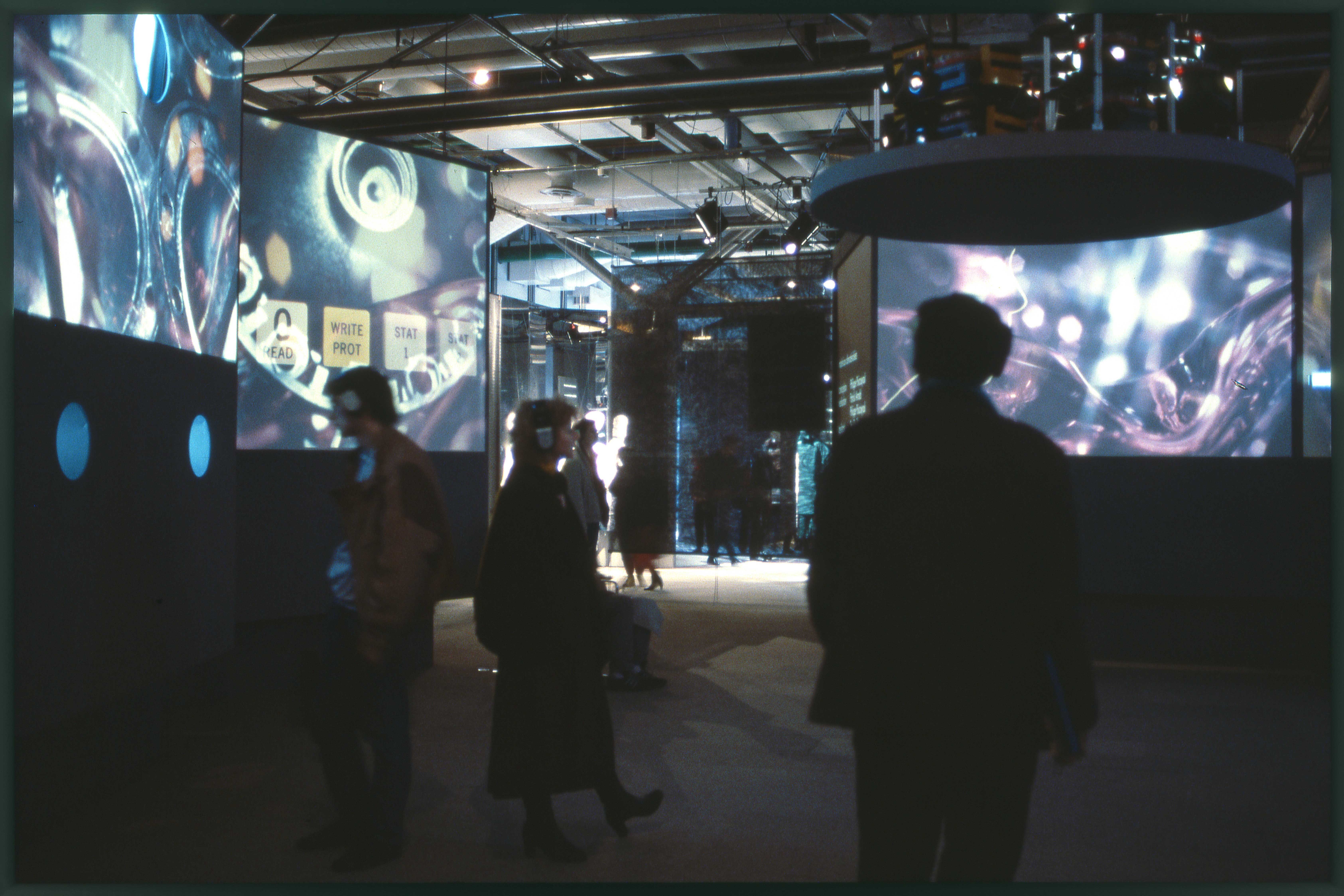
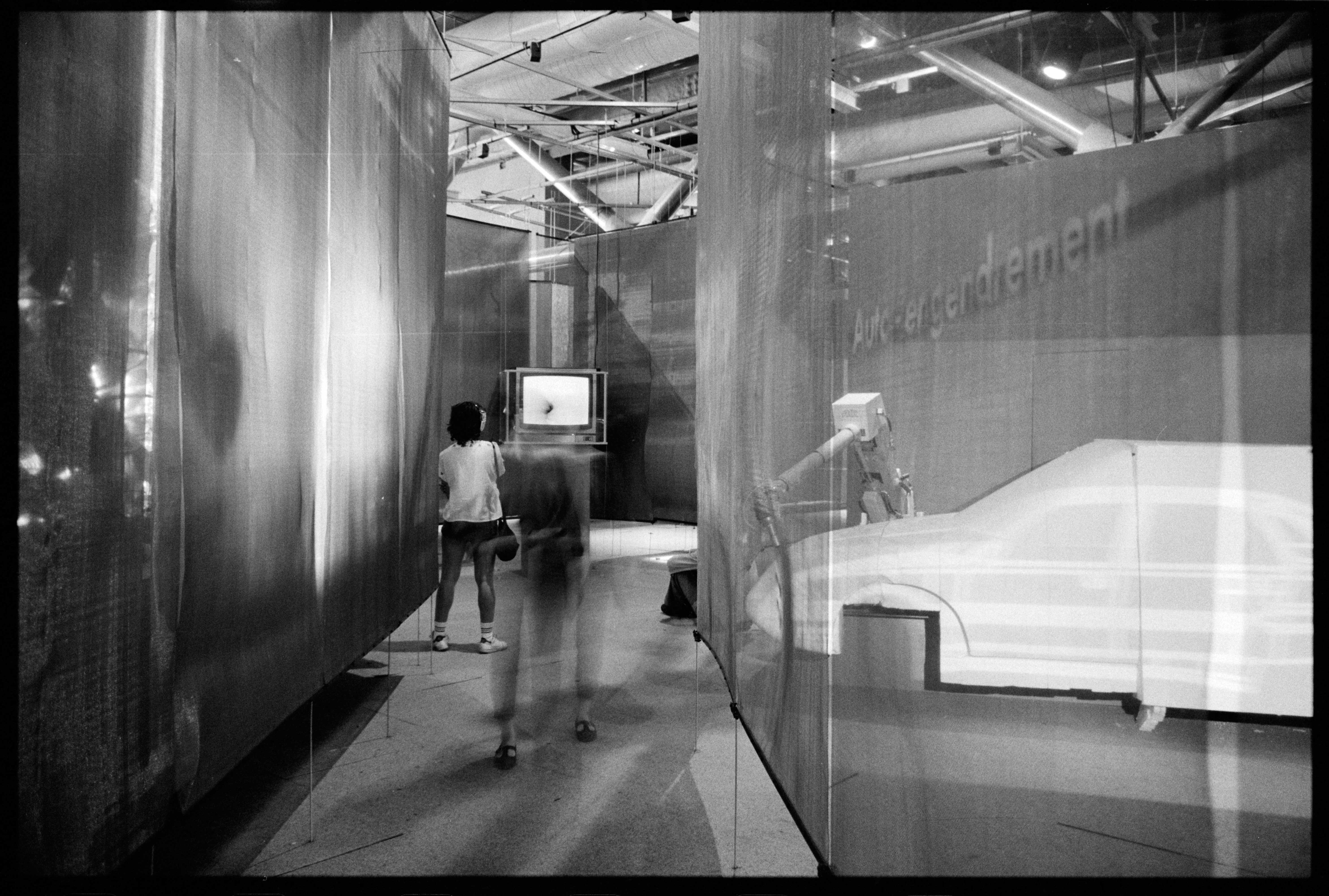
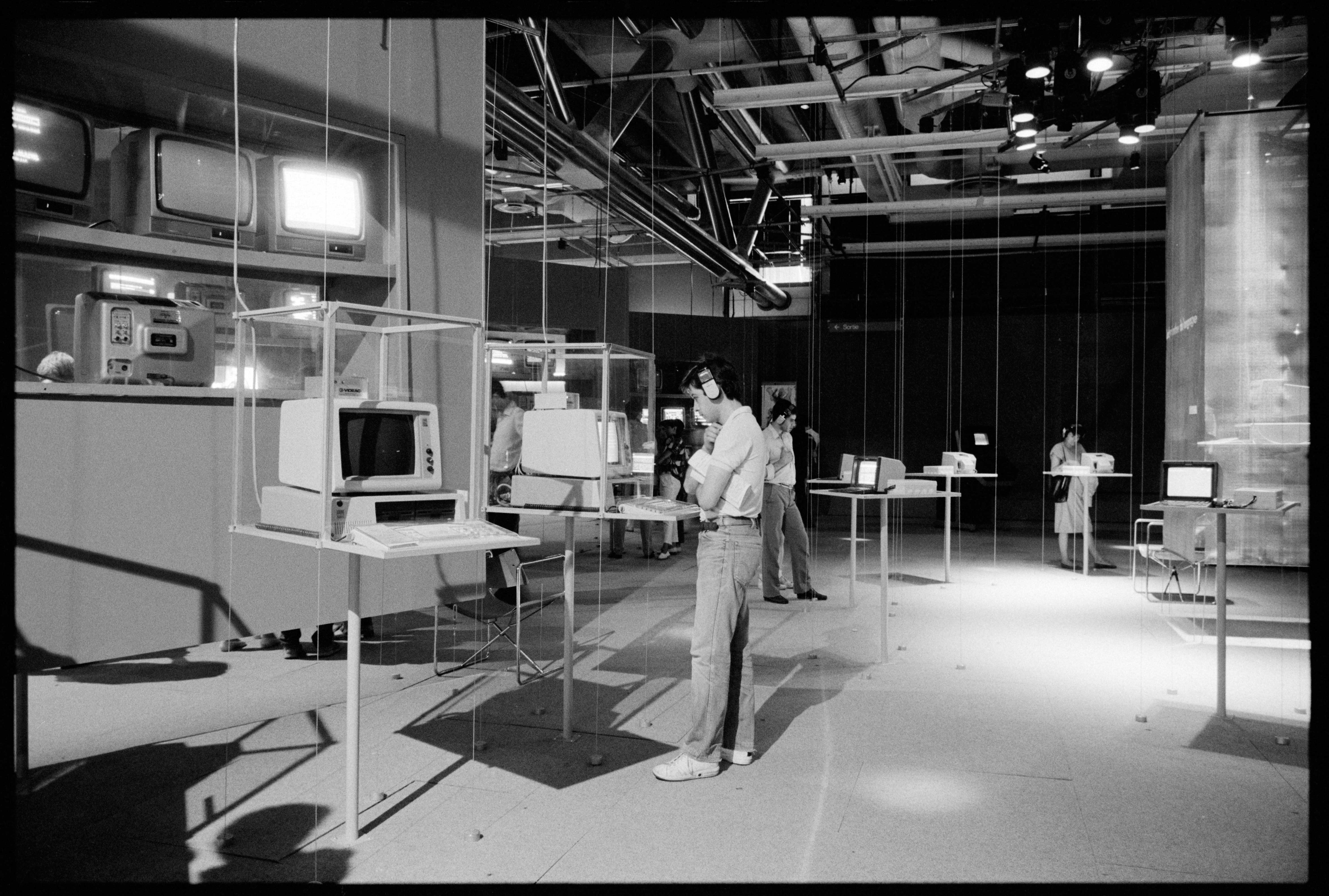
The architects Philippe Délis and Katia Lafitte developed an experimental scenography based on the notions of immateriality and indistinctness. The structure of the exhibition was labyrinthine with no specific path imposed. Suspended screens of multi-layered metal mesh that differed in gradients of transparency divided the space into partitions.
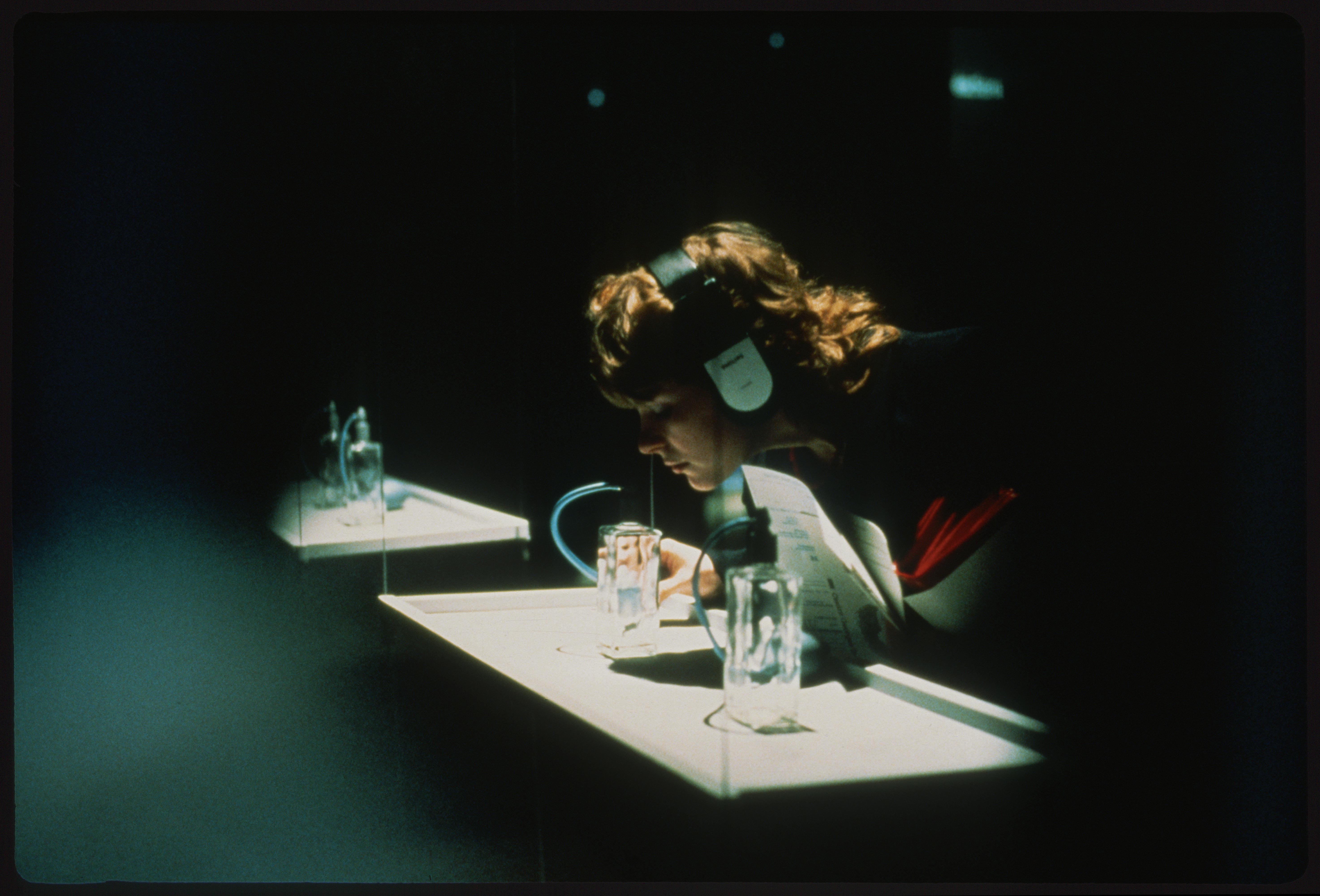
Headphones enabled visitors to listen to soundtracks which included readings of literary, philosophical, and poetic texts that were accompanied by electronic music. By means of infrared technology, the movement through the exhibition space triggered the switching of channels. These soundtracks enriched the exhibition with additional auditive associations and elements of disruption.

Find the INDEX number next to the artwork.
Tap number to type.